year
2023
Role
Service Designer. Learning experience, narrative and teaching materials
timeframe
2 months
tools
Qiskit, Grasshopper, Spline, Illustrator, Keynote
A learning tool built with IBM Quantum and Parsons that makes quantum noise visible, touchable and explainable for high school students. It placed runner-up at the IBM Quantum Hackathon at Parsons and was exhibited at Microscope Gallery in New York. I was the service designer: I framed the audience and the learning journey and built the story and teaching materials around the data. Max Emrich engineered the data pipeline and the 3D model.
THE IDEA
We turned the noise inside a quantum computer into something you can touch
Quantum computers make mistakes. Run the same circuit twice and you can get two different answers. That noise is the problem the whole field is racing to solve, and the hardest idea to teach. We ran one circuit on a real IBM quantum computer and turned every hit and miss into a spiral students can touch.
1,024
runs of one circuit on a real IBM quantum computer
2nd
place overall at the IBM Quantum Hackathon at Parsons
20 min
how often the live prototype pulls fresh data from a quantum computer today
3×
more quantum job openings than qualified people to fill them (McKinsey)
The object. Every column is a streak of correct answers, so the noise shows up as a gap.
The gallery. At Microscope Gallery in New York, visitors pressed 1, 2 or 3 to load a different quantum run and watch the spiral change.
HOW WE MADE IT TEACHABLE
Count the streak, not the error
A percentage means nothing to a high school student. A streak does. So we stopped showing error and started showing how many measurements in a row the machine gets right before it slips. Tall column, good run. Short column, noise.
01
Measure
Run one circuit 1,024 times in Qiskit and compare every result to the ideal simulation.
02
Count
Turn the hits and misses into streaks of consecutive correct measurements.
03
Build
Each streak becomes a column. Max Emrich’s Grasshopper cluster wraps them into a 3D-printed spiral.
04
Explore
A light table shows which state was measured at each point, and keys 1, 2 and 3 swap between runs.
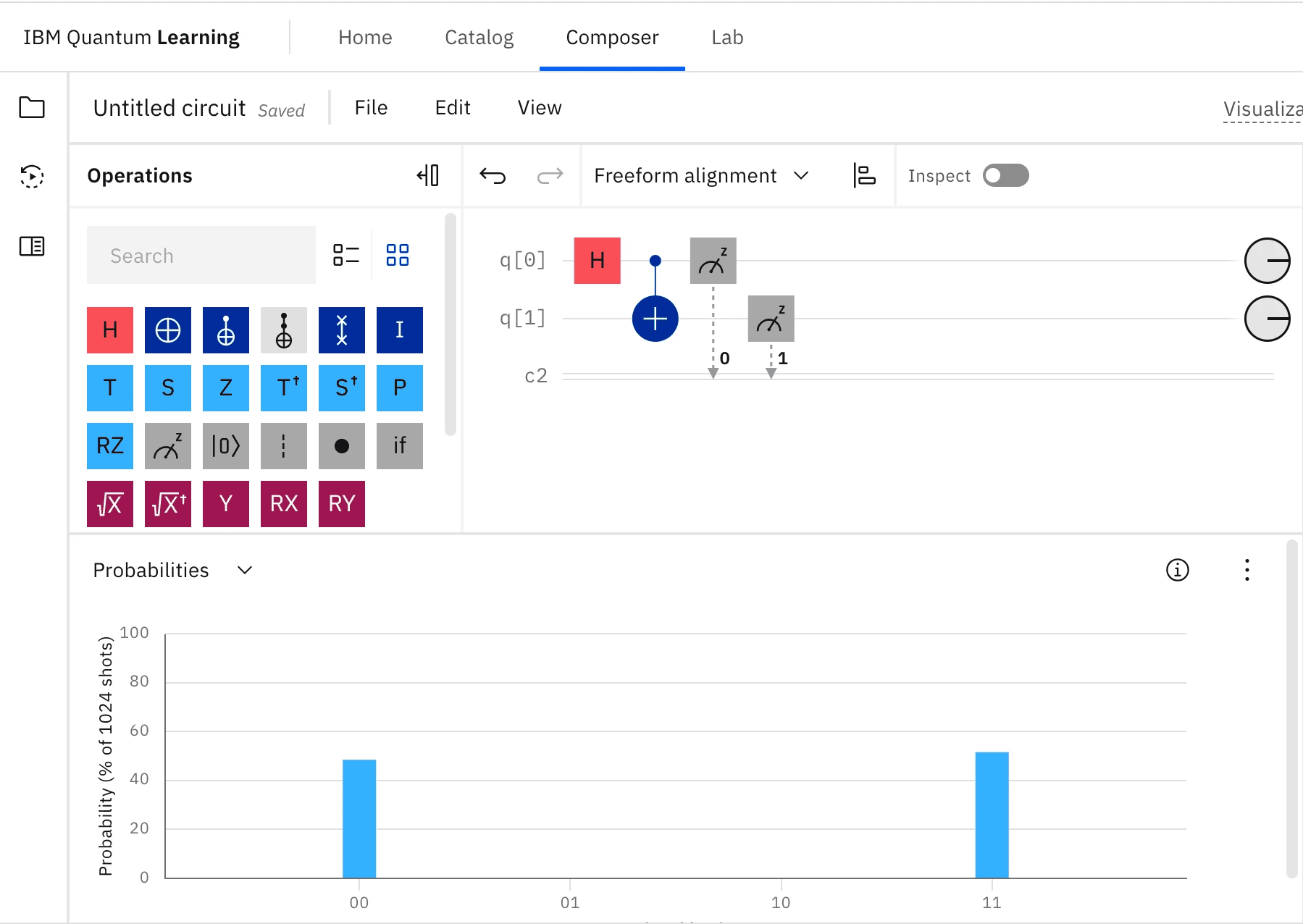
Real hardware, not a simulator. The circuit was built in Qiskit, IBM's open-source quantum framework, so every gap in the spiral is noise from an actual machine.
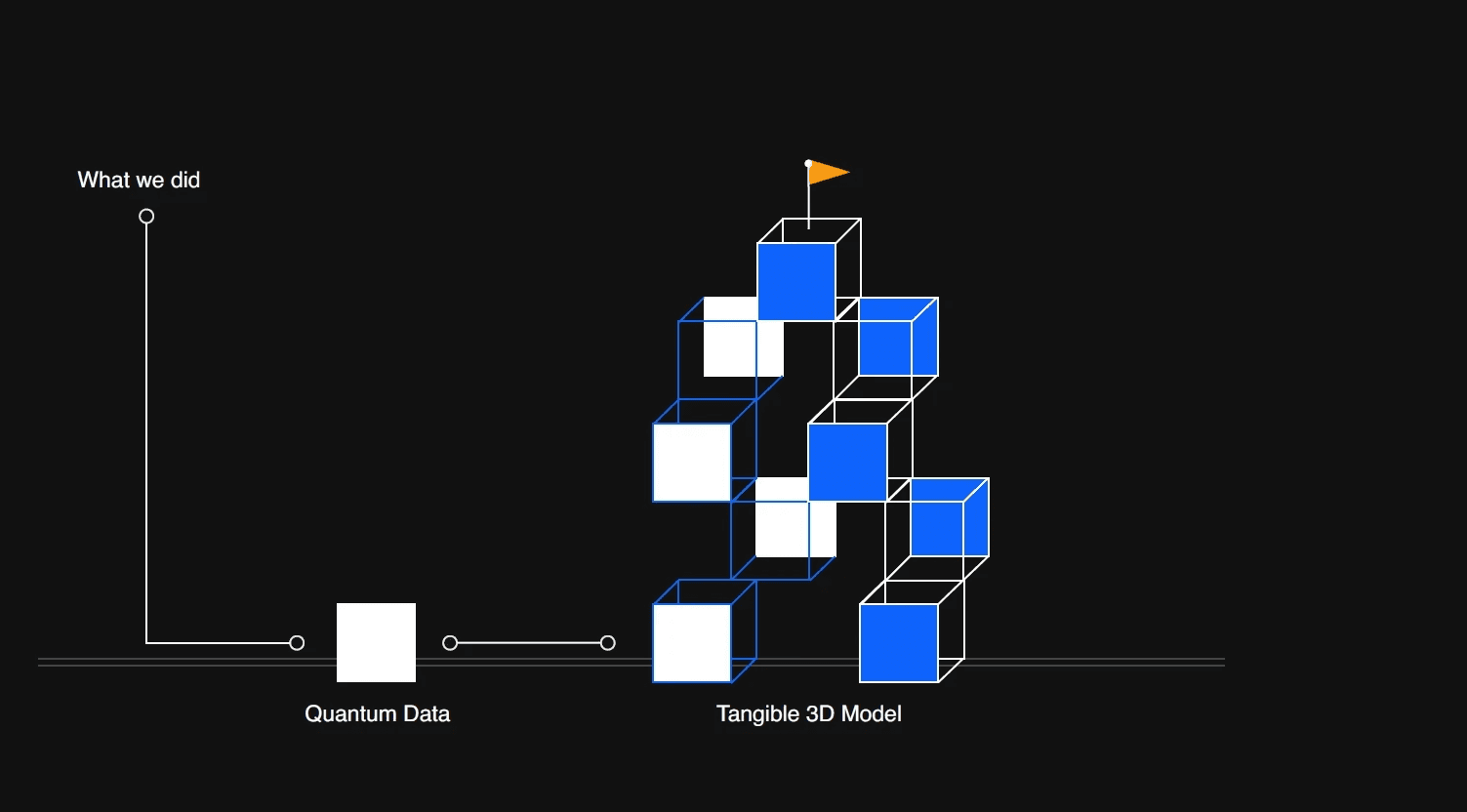
Start from the learner, not the physics. The first question was what a student new to computational thinking already understands. The answer, streaks, shaped everything after it.
For teachers, a short animation walks through the algorithm one step at a time and shows where noise changes the expected answer. It gives a class a starting point before anyone touches the spiral.
Max built a custom Grasshopper cluster that reads the noise in the dataset and turns each streak into geometry. That is what lets a student feel the difference between a good run and a noisy one.
The digital version mirrors the physical spiral in Spline, so students can keep exploring after class. We pitched it at IBM Labs and were selected to exhibit at Microscope Gallery in New York.
WHY IT MATTERS
Quantum needs translators, not just physicists
McKinsey counts three quantum job openings for every qualified person who could fill them, and only 29 of 176 university quantum programs offer graduate degrees. The field will not close that gap with physicists alone. It needs people who can explain the machine to everyone else, starting in high school. This project is a working model of that.
WHERE IT IS NOW
Still running on a real quantum computer
Max kept building after the exhibition. Today the prototype is a live site that pulls fresh data from a real IBM quantum computer every 20 minutes and redraws the columns, so the noise you see is the machine’s noise right now. Visitors pick a run, read the probabilities and watch the streaks rebuild.